The Dynamics Duo

Handling & ESC with Dynamics Duo

Reveal the relationship between steering input and vehicle response clearly, consistently and in real time.

When response gets dynamic, confidence drops

ESC and handling tests are run on controlled surfaces, and the challenge is interpreting behaviour when manoeuvres are fast and systems intervene. Steering input, yaw and body motion happen together. If those signals are noisy, delayed, or referenced to the wrong point on the car, cause and effect becomes ambiguous. 

A single reference for vehicle motion

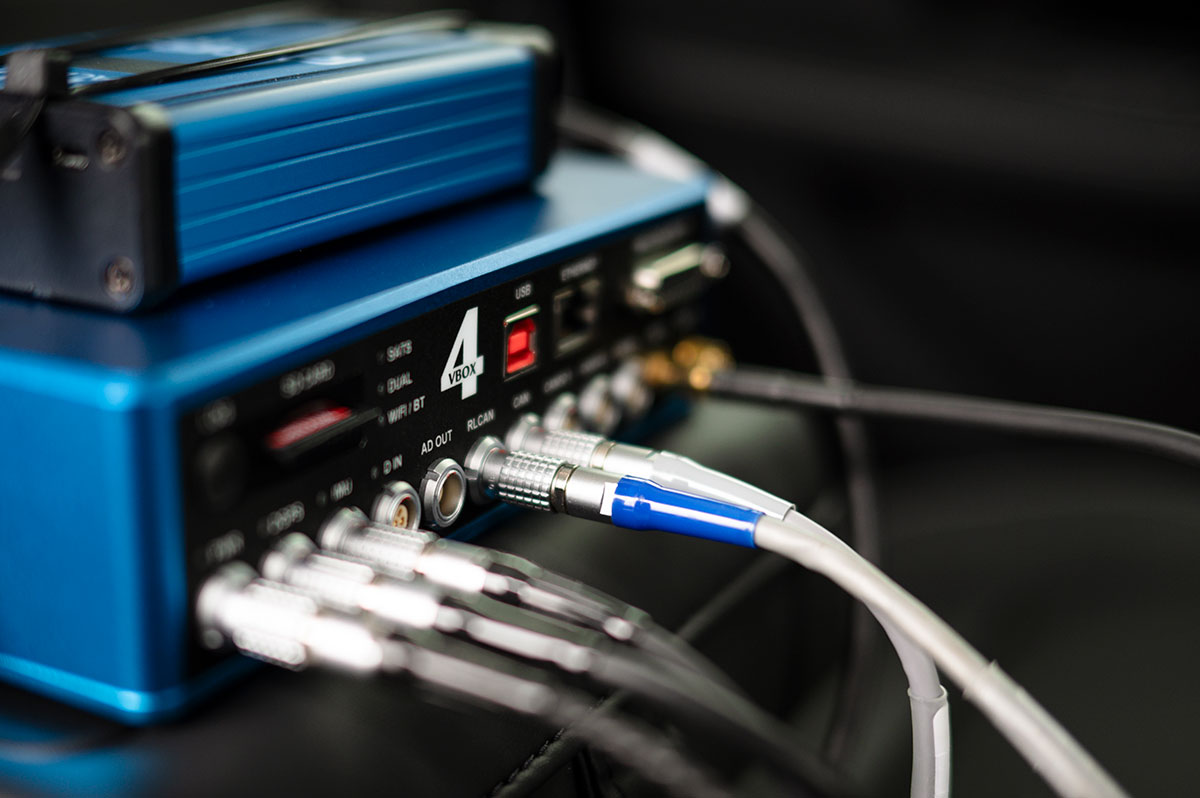
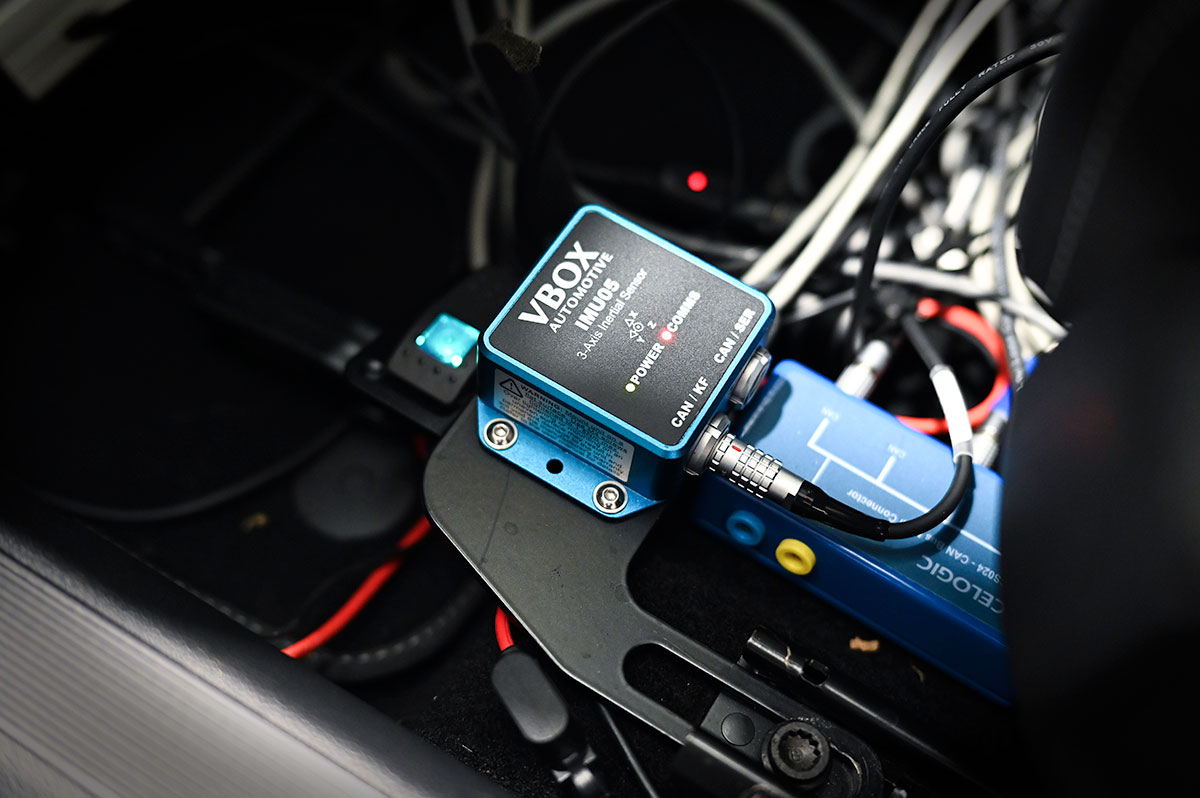
Dynamics Duo combines VBOX 4 and IMU05 for a unified centre-of-gravity-referenced vehicle motion measurement. Steering input, yaw rate, slip angle, lateral acceleration and path are all captured on one time base, with low noise and lag, displayed in real-time. 


This allows engineers to see the true relationship between input and response so vehicle behaviour and handling balance can be evaluated objectively, without subjectivity. 

Why Dynamics Duo

Accurate Inputs. True Vehicle Behaviour

For handling analysis, measurements must reflect how the vehicle moves at the true centre of gravity. 

Dynamics Duo provides: 

  • Speed referenced to the centre of gravity, unaffected by wheel slip 
  • Yaw rate and lateral acceleration calculated at the CG 
  • Accurate vehicle trajectory for path assessment 
  • Longitudinal acceleration (Ax) to understand braking or lift-off during intervention 

This keeps stability analysis tied to the true motion of the vehicle. 

Clean Data. More Reliable Analysis

During fast manoeuvres, noisy or biased data makes behaviour hard to interpret. 

With low-noise inertial data: 

  • Pitch and roll are measured during rapid steering inputs 
  • Yaw rate and lateral acceleration remain stable in aggressive events 
  • Vehicle rotation is measured without roof-mounted exaggeration 

This means conclusions about stability and ESC performance are based on clear, reliable signals.

Separate Driver Input from ESC Intervention

To tune ESC, you need to know what the driver did and what the system did. 

The Dynamics Duo lets you: 

  • Log steering angle alongside yaw rate 
  • Compare wheel speeds with vehicle rotation 
  • Record ESC status and brake signals via CAN 

This makes it easier to see whether behaviour comes from driver input or system intervention. 

Built for Real ESC and Handling Programmes

From ISO lane change tests to sine-with-dwell and steady-state manoeuvres: 

  • One installation supports multiple test types 
  • Alignment is quick, even across vehicle changes
  • Real-time feedback confirms that the run is valid 

Measure motion once and use it across the full stability programme. 

ESC & Handling Standards and Frameworks

Dynamics Duo is ideal for meeting a range of standards and frameworks by validating response, stability and intervention behaviour with confidence. 

FMVSS 126 (ESC)

Manoeuvre: Sine with dwell

What to assess: ESC intervention timing and stability response 

The challenge: Steering–yaw phase lag, noisy yaw in transients  

How Dynamics Duo helps: Low-lag yaw and slip-on one-time base align input and response 

UNECE R13-H (ESC)

Manoeuvre: ESC activation behaviour 

What to assess: Stability before and after intervention 

The challenge: Separating driver input from ESC action 

How Dynamics Duo helps: CG-referenced yaw, slip and Ay clarify cause and effect 

ISO 3888-2

Manoeuvre: Double lane change 

What to assess: Path following and corridor compliance 

The challenge: Path breaks, roof-biased motion 

How Dynamics Duo helps: Continuous path and CG-true motion keep corridor analysis valid

ISO 4138

Manoeuvre: Steady-state circular driving 

What to assess: Understeer gradient, yaw rate gain 

The challenge: Noise masks subtle balance changes 

How Dynamics Duo helps: Low-noise yaw and Ay reveal handling balance 

ISO 7401

Manoeuvre: Transient response tests 

What to assess: Response to rapid steering inputs

The challenge: Delayed or noisy signals

How Dynamics Duo helps: Time-aligned steering, yaw and slip show true response 

OEM ESC protocols

Manoeuvre: Variant-specific tests

What to assess: Calibration validation and benchmarking 

The challenge: Calibration validation and benchmarking 
Inconsistent reference points 

How Dynamics Duo helps: Single motion reference simplifies comparison

OEM ESC protocols

Manoeuvre: Proving-ground frameworks 

What to assess: Development lane change

The challenge: Driver feedback hard to quantify 

How Dynamics Duo helps: Slip angle and yaw rate objectify driver input 

    What Engineers Can Measure

    The Dynamics Duo delivers the measurements required to assess performance, stability and vehicle behaviour using objective, reproducible parameters.

    Steering & Vehicle Response

    Vehicle response to driver input: 

    • Steering angle compared against yaw rate 
    • How quickly the vehicle starts to rotate 
    • Yaw rate gain as speed increases 
    • Understeer or oversteer behaviour 

    Slip & Vehicle Balance

    Understand how the vehicle rotates and holds the corner: 

    • Body slip angle at the centre of gravity (CG) 
    • Front versus rear slip comparison  
    • Lateral acceleration at the CG 
    • Handling balance changes with speed or surface 

    Path & Lane Change

    Confirm the vehicle follows the intended line: 

    • Trajectory through the manoeuvre 
    • ISO 3888-2 corridor compliance 
    • Speed and distance throughout the test 

    Stability & ESC Behaviour

    Assess how stability systems influence the vehicle: 

    • ESC activation timing via CAN 
    • Yaw change after ESC intervention 
    • Effect of intervention on slip and lateral acceleration 

    Fast manoeuvres

    Analyse rapid changes in vehicle motion: 

    • How fast yaw builds and settles 
    • Roll and pitch during sharp inputs 
    • Left versus right comparison 
    • Run-to-run repeatability 

    Installation and operation

    A simple installation of the IMU at Centre of Gravity and VBOX 4 secured on the ISOFIX mount allows for fast alignment and quick vehicle swaps. Real-time display confirms runs on track through multiple data streams so no time on track is wasted

    Software to Support ESC & Handling

    After testing, VBOX Test Suite lets you overlay runs under identical conditions compare steering and yaw response, visualise slip angle and lateral acceleration together, and export data for review, benchmarking and development. 

    Confidence in stability decisions

    ESC calibration and handling balance depend on understanding how a vehicle responds before systems intervene. Accurate, repeatable data supports tuning decisions, competitor benchmarking and validation work against recognised standards. 

    See how the Dynamics Duo fits your ESC & handling workflow